



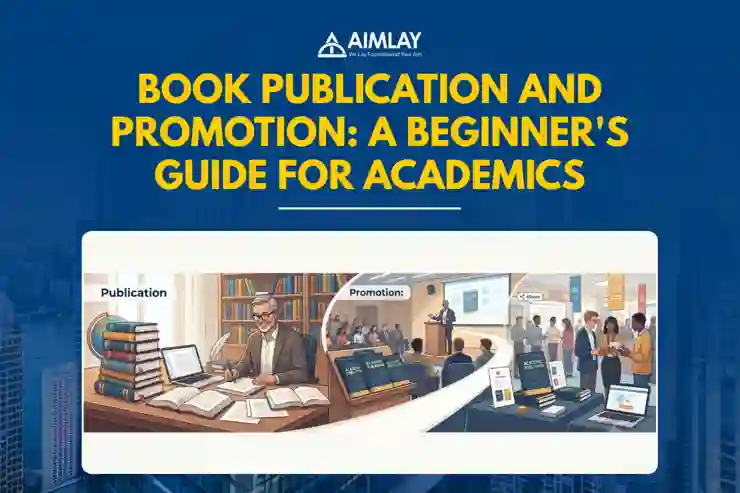
Writing a manuscript is just one of many steps to take when it comes to publishing a research or scholarly book; The other very important area is called “Book Publication and Promotion“. While an author may have written an outstanding book, they will need to find the correct marketing plan in order to get that message out.
If it is your first time published in the field of academic books, then the whole process includes finding the right publisher, preparing the manuscript for press, learning about the contract agreements with publishers, and promoting the published work and getting it into the hands of its target audience. Traditional publishers and self-publishing authors can maximize the impact on their target audience and promote their books’ distribution using effective strategies.
Table of Content
• Choosing the Right Publishing Path
• Why Book Promotion Matters
• Book Publication and Promotion for Researchers
• Common Mistakes First-Time Academic Authors Should Avoid
• Conclusion
• Frequently Asked Questions
How to Publish an Academic Book
Many new writers think their manuscript will be published as soon as it is finished. However, many other things have to happen prior to being accepted for publishing by a publisher, such as how unique or original the content is; the quality of the research included in the work; who the intended audience is (the demographic); whether there are readers out there interested in the subject matter of the manuscript.
Steps to Publish an Academic Book
The publication process generally includes:
• Finalizing and editing your manuscript.
• Identifying the right academic publisher.
• Preparing a book proposal if required.
• Submitting the manuscript for review.
• Completing revisions suggested by editors.
• Signing the publication agreement.
Following these steps makes book publishing for academics more organized and less overwhelming.
Traditional Publishing vs Self-Publishing
| Traditional Publishing | Self-Publishing |
|---|---|
| Publisher manages production | Author manages publication |
| Peer review is often included | Quality control depends on the author |
| Wider academic credibility | Greater creative control |
| Lower upfront cost | Higher responsibility for marketing |
| Royalties shared with publisher | Higher royalty potential |
Understanding self-publishing vs traditional publishing for academic books helps authors choose the option that best fits their goals.
Choosing the Right Publishing Path
One of the most frequently asked questions has been “What are the ways in which I can publish my academic book?”
Your goals will dictate how you respond. If your objective is to receive academic recognition, then a University Press or well-established Academic Publisher may provide the best options for this purpose. If your desire is to have full control over all aspects related to the publishing schedule, price and distribution of your work; Self-Publishing could offer the perfect solution.
Before making a decision, consider:
• Your target audience.
• Publishing timeline.
• Budget.
• Distribution requirements.
• Long-term academic goals.
Selecting the right publishing model is just as important as writing a strong manuscript.
Why Book Promotion Matters
Many authors assume that once the book is published, the publishers will take over and market it on their own. However, while the publishers do provide promotional support, it is also the author’s responsibility to help drive the sales of their book.
Promoting an academic book is important to help get the research in front of students, professors, researchers, and other institutions interested in the field of study.
Book Marketing Strategies for Academics
Successful promotion often includes:
• Sharing the book through professional networks.
• Engaging in research presentations (academic) at conferences.
• Attending academic seminars/webinars.
• LinkedIn promotion of your book/academic networks.
• Requesting reviews from peers and readers.
These are a few examples of how you may promote your work as an academic by increasing visibility and credibility professionally.
Additionally, posting informational articles/blogs, being a podcast guest, and having your content published in other people’s blogs/articles is one way that you may be able to reach larger audiences than would normally read your work through traditional academic channels.
Book Publication and Promotion for Researchers
Books are generally used as an alternative way for academics to present large-scale research projects (that are too complex to provide adequate detail in the form of journal articles). Also, publishing a book provides academics with a mechanism to establish themselves as experts in a specific area.
However, promoting a researcher’s successful book requires striking a balance between providing high-quality work academically and ensuring the content is accessible to the intended audience. In other words, while it is important to maintain scholarly standards; at the same time, researchers need to ensure they write clearly so the intended audience may benefit from reading their book.
Academic publishing is only the first step of the way. Once your work has been published, you will want to promote it to maintain your presence in front of your audience. You can do that by organizing or attending academic conferences, promoting the book and communicating with its readers via social media and online forums, and so on.
Moreover, there are organizations like Aimlay that offer assistance to students at every stage of the way, including higher education, research, and academic publishing. Such companies help inexperienced scholars navigate through the intricacies of the publishing process.
Common Mistakes First-Time Academic Authors Should Avoid
Even an author who writes a very good book may have difficulty with the process of having it published because he or she has made errors in the process of preparing for publication.
Common errors that authors make while trying to get their book published include selecting a poor publisher; failing to take advantage of editorial suggestions from editors at the publishing company (editorial feedback); failing to promote his/her/their book; and failing to establish a clearly defined audience for the book.
In addition to these common errors, authors are often hasty about getting their work into print as quickly as possible. In doing so, they fail to allow time for careful editing by someone other than themselves (independent editor), properly cite all sources used in the writing of the book (proper citations), and hire a professional proofreader to review each page of the manuscript before its printed.
If authors understand what is involved in the process of getting a book published and develop a plan to effectively promote their work, then first-time authors will be able to optimize their success.
Conclusion
Publishing a scholarly book is far from simply writing the final version of a manuscript. A scholar will need to plan carefully as well as select a suitable publishing model in addition to marketing the book appropriately. To help scholars disseminate their research more successfully and strengthen their academic reputation, understanding Book Publication and Promotion is essential.
Regardless whether you opt for traditional publishing or self-publishing, a scholar’s ability to publish a successful book depends on how good the book is and if the author engages with their target market of readers post-publication. If one plans properly and continually markets his/her first academic book; it has the potential to be a positive contribution to one’s discipline and assist with achieving a scholar’s long term academic and career goals.
Frequently Asked Questions
How do you go about publishing an academic book for the first time?
Writing and publishing an academic book for the first time entails writing a well-researched and thoroughly edited manuscript. After completing this task you will need to determine which type of academic publishers or self-published options are available and would be suitable for your work. Once you have determined these options you will submit either a proposal or your completed manuscript as per their requirements. The last step in the process is to provide a promotional push for your book once it has been published.
What is the most effective means by which to publish an academic book?
Which publishing option is best depends upon what you hope to achieve. Academic recognition through editorial involvement and guidance will typically occur when using traditional methods of publishing; however, increased financial returns (through royalties), greater creative control, and quicker time-to-market will occur when using self-publishing.
What steps can I take to have my academic book published?
In order to have your academic book published, create a high quality manuscript, identify those types of publishers that align with your subject matter, develop a compelling proposal (if requested) and adhere to all of the specific instructions provided for submitting your manuscript to each of the various publishers.
In terms of self-publishing vs. traditional publishing, how do they differ when it comes to academic books?
Self-publishing involves authors having total control over the entire publishing process; including managing and performing the editing, cover design, marketing, and distribution. Conversely, traditional publishing involves the use of editorial reviewers who assess manuscripts prior to publication; the creation of professionally designed and produced publications; and the distributors being responsible for distributing the books directly to retailers and libraries.
Why is academic book promotion important after publication?
Academic book promotion helps increase visibility, reach the intended audience, improve citations, generate reviews, and establish the author’s reputation within the academic community and beyond.
Which of the best methods for authors who write about academic subjects (and wish to promote their books) would you recommend?
Conferences, professional contacts, LinkedIn & other social media sites used by academics, author participation in webinars, guest posting on blogs or articles related to your area of expertise as well as requesting scholarly reviews from others all have some merit.
Can researchers self-publish academic books?
Researchers could self-publish the book because they prefer to retain creative control of their works and faster publishing. However, the book should pass through professional editing and peer-reviewing before being published. It ensures that the work passes academic and professional standards.
How long does it take to publish an academic book?
The time period depends on the publisher. If it is a traditional publishing house, then the process could take more than a year. However, if the book is self-published, then it will be available for a shorter time if it passes all editing processes.
In terms of the steps to produce an academic book what common errors made by new academic authors occur during these processes?
Authors have reported common issues such as;
Unedited manuscripts being submitted,
Selecting inappropriate publishers,
Failing to follow a set of submission requirements,
Not taking advantage of promotional opportunities,
Failure to adequately articulate intended target audiences.
How can Aimlay support researchers interested in book publication?
Aimlay provides guidance to scholars on higher education, research, and academic publishing processes. It helps researchers better understand publication pathways and supports them in making informed decisions throughout their academic journey.
