



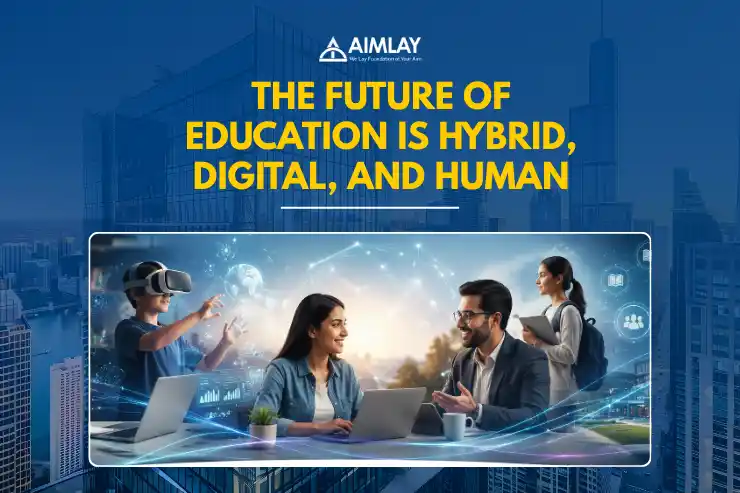
The hybrid education model of the future will be neither fully online nor fully in person. Rather than being solely an internet-based experience or solely an in-person experience, the hybrid education model will have elements that combine the best parts of each. One day soon, learning mixes online tools with real people. Tech lets kids’ study when it suits them best. Because teachers stay involved, young minds get help thinking deeper. Growth happens where screens meet support.
Today’s Hybrid Learning Model is Already Changing Schools, Colleges, and Workplaces.
Artificial Intelligence (AI) helps to create virtual classrooms as well as personal learning platforms for students. Simultaneously, educators are working on developing connections between themselves and students. As such, the future belongs to systems that provide balance between technology and human relationships.
Table of Content
• Hybrid Learning vs Traditional Classroom
• The Rise of Digital Education
• The Role of Human Teachers in the Digital Age
• Human-Centered Education Matters More Than Ever
• How Institutions Can Prepare
• Conclusion
• Frequently Asked Questions
Why Hybrid Education Is the Future
The traditional classroom has served students for decades. However, modern learners need more flexibility. They want an education that fits their schedules, learning styles, and career goals.
• This is where hybrid learning stands out.
• Key Reasons Behind the Shift
• Greater learning flexibility
• Better access to educational resources
• Personalized learning experiences
• Improved digital literacy
• Stronger collaboration between teachers and students
• Enhanced learning outcomes
As a result, institutions worldwide are investing in digital transformation in education.
Hybrid Learning vs Traditional Classroom
| Feature | Traditional Classroom | Hybrid Learning Model |
|---|---|---|
| Learning Location | Physical classroom only | Online and offline |
| Flexibility | Limited | High |
| Learning Pace | Same for all students | Personalized |
| Technology Use | Minimal | Extensive |
| Accessibility | Location-dependent | Global access |
| Student Engagement | Classroom-focused | Multi-channel engagement |
The blended learning future offers the best of both worlds. Students can attend classes in person while accessing digital resources anytime.
The Rise of Digital Education
The future of digital education is closely linked to technological innovation. New platforms are changing how students learn and interact.
How Digital Tools Are Changing Education
The role of technology in schools is now an integral part of the classroom experience. The use of technology in the classroom will be a requirement.
Additionally, there are several key developments to note:
• Learning management systems (LMS)
• Digital interactive content
• Virtual labs.
• Video-based learning platforms
• Cloud based collaboration tools for remote or mobile students
• Mobile apps that facilitate learning on-the-go.
Students also have the ability to obtain course material regardless of location; this eliminates physical barriers and allows all students equal opportunity to succeed.
Popular E-Learning Trends
There are many emerging trends in e-learning that are changing how we learn as well as the delivery method of our education:
• Microlearning Modules
• Gamification of the Learning Experience
• Education for Mobile First
• Virtual/Augmented Reality Experiences
• AI-Powered Tutoring System
• Certifications Based on Skills
Learning is becoming much more interactive and relevant with these new technologies.
AI in Education: A Powerful Partner
Education using artificial intelligence (AI) is changing how we learn. AI is NOT going to replace educators.
AI assists educators with becoming more efficient.
Benefits of AI in Education
• Automated assessment
• Customized learning pathways
• Immediate Feedback from Students
• Tracking Student Performance
• Analyzing Predictive Learning Data for Students
Example: AI identifies areas in which students are having difficulty. Educators provide additional assistance to those specific areas. As a result, learning is more productive, centered on the student.
Personalized Learning Is Becoming the Norm
All students learn differently. Visual learners learn better visually. Learners who learn best through hands-on experiences learn that way.
Personalized learning meets the difference.
Benefits of Personalized Learning
• More Student Engagement
• Greater Retention Rates
• Better Academic Success
• More Confidence
Because technology can track learning behavior, educational platforms can recommend customized content. Consequently, students receive support tailored to their needs.
The Role of Human Teachers in the Digital Age
Despite rapid technological growth, human teachers remain irreplaceable.
Technology can deliver information. However, teachers provide wisdom, empathy, and inspiration.
Role of Human Teachers in Digital Age
Teachers help students by:
• Developing critical thinking
• Enhancing their communication skills
• Help develop their emotional intelligence
• Keep them motivated
• Prepare them for real world problems
Teachers build spaces where people learn together, forming bonds that shape the experience. What happens when someone truly listens cannot be copied by code or matched by machines.
Human-Centered Education Matters More Than Ever
When tech moves forward, schools must care more about students. People matter most when tools get smarter. Learning stays meaningful only if it serves those who learn. What works grow out of real life, not just machines. Progress means teaching feels personal, never mechanical.
Not every lesson comes from textbooks. A helping hand matters when figuring things out together.
Elements of Human-Centered Education
• Wellness of the student
• Creating inclusive learning communities
• Fostering Emotional Intelligence Growth
• Supportive Collaborative Learning Environments
• Using School Tech, the Right Way
Too much tech in schools can push people apart. Yet learning still needs face time. Because screens cannot teach everything. Still some tools help. But only if teachers stay central. Even keyboards lose meaning without human guidance. So balance matters most of all.
The Future of Online and Offline Education
The debate around online vs offline learning is gradually fading. The future is not about choosing one over the other.
Instead, successful institutions are integrating both approaches.
What the Future Classroom May Look Like
• Smart classrooms with AI support
• Flexible attendance options
• Virtual reality learning experiences
• Real-time performance analytics
• Personalized learning pathways
• Strong teacher-student collaboration
This blended classroom model allows students to learn anytime while maintaining meaningful human engagement.
How Institutions Can Prepare
Educational institutions must adapt to remain relevant.
They should focus on:
• Investing in educational technology
• Training teachers in digital tools
• Promoting hybrid learning strategies
• Enhancing student support systems
• Encouraging lifelong learning
For some time now, Aimlay has seen how more people value adaptable ways to learn. When someone wants a better job or to study further, mixing online with classroom teaching helps them get a good education without losing access. The balance shifts yet stay within reach.
Conclusion
Hybrid education is the future because it brings together Technology, flexibility, and human connection. While Technology will continue to revolutionize how we learn, artificial intelligence (AI) will allow for even more personalized and effective education. Despite the increased use of Technology. However, teachers will still be the core of what we call “learning.”
One day, schools might mix fresh thinking with kindness at the core. Because of how kids learn differently, digital lessons could walk hand in hand with classroom time. This blend may let each student grow in their own rhythm. The warmth of real teachers stays central, even when screens are involved.
Frequently Asked Questions
Why is hybrid education considered the future of learning?
Hybrid education allows students to take advantage of online flexibility while also allowing them to interact in person with other students and instructors. As such, it provides all three elements of flexible, personalized, and engaging experiences.
What are the benefits of a blended learning model?
There are many advantages of the use of a blended learning program including: Flexibility in Learning, Personalized Learning, Accessibility for Students, and Improved Student Outcomes.
How is AI changing education?
AI has impacted teaching and learning by using automation to improve assessment methods for students. Also to help personalize learning by recommending content that best fits each individual child’s needs. In addition, it can help teachers with the use of data-driven insights to assist them in providing better instruction.
Will technology replace teachers in the future?
There should be no fear of computers replacing teachers as technology will support learning while humans are needed to guide children through development of critical thinking skills, as well as developing emotional intelligence to work collaboratively with others.
What is human-centered education?
It is a well-being of learners sitting at the heart of learning spaces where connection matters more than control. Instead of isolated tasks, shared efforts shape daily classroom life through mutual respect.
What is the future of online and offline education?
Future paths for digital learning blend classroom moments. One way grows through screens at home. Other stays rooted in school halls. Each shape how knowledge moves. Time tells which bends closer to need.
Learning ahead mixes web classes with classroom moments, shaped by tech that supports real connections. Not one replacing the other – instead, screens help voices be heard more clearly across distances.
